BASIL PESTO RECIPE moments usually hit right when you are staring at a sad bunch of basil that is about to wilt, and you do not want to waste it. I have been there, and honestly, pesto is one of the fastest ways to turn that basil into something you will actually use all week. This is the kind of sauce that makes plain pasta feel like a real dinner, even if you are low on energy.
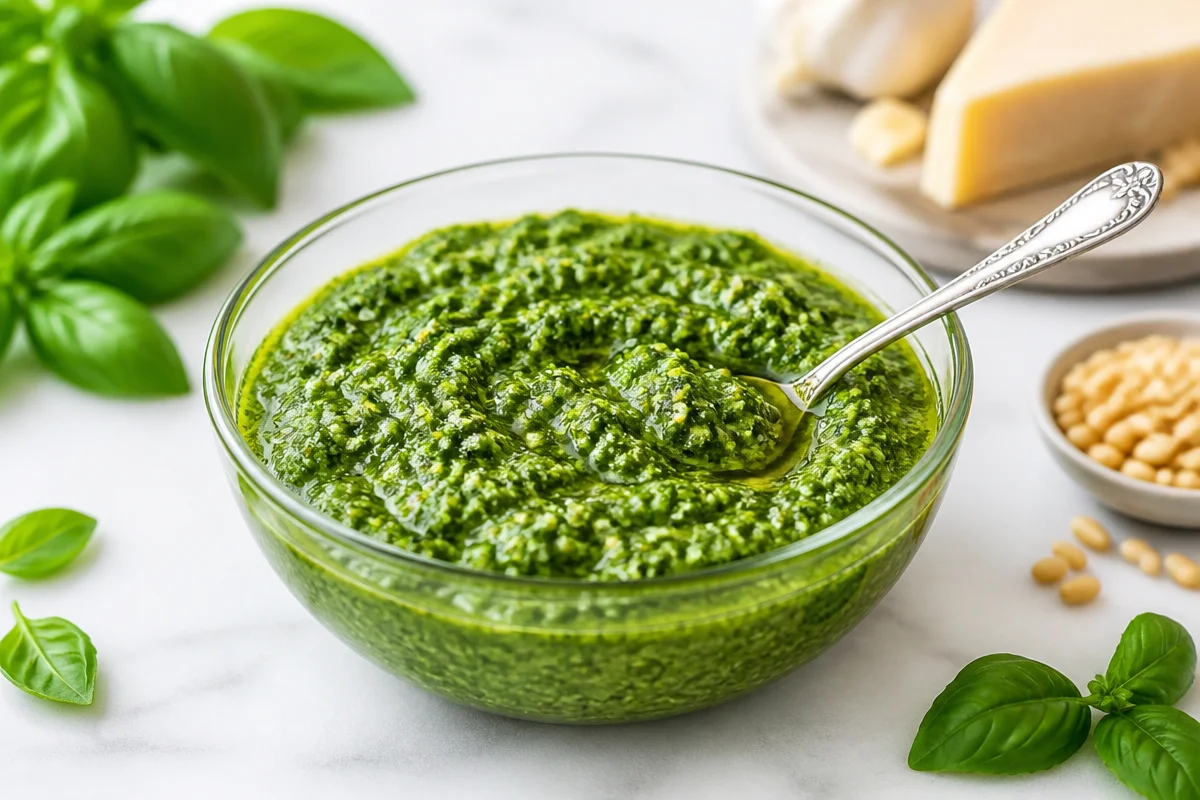
Table of Contents
What Is Basil Pesto?
Basil pesto is a classic Italian sauce that is usually made with fresh basil, garlic, nuts, cheese, olive oil, and a little salt. It comes from Genoa, and the traditional version uses pine nuts and Parmesan, though home cooks swap things all the time. The texture is thick but spoonable, kind of like a loose paste that clings to pasta and bread in the best way.
I think pesto is popular because it tastes like summer in one bite. It is herby, a little salty, a little nutty, and it can be as bold as you want depending on how much garlic you add. If you have ever ordered pesto pasta at a restaurant and wondered why yours tastes different, it is usually because of basil freshness, oil quality, or the cheese you used.
One more thing that matters: basil pesto is not cooked. It is a fresh sauce, so your ingredients really show up. That is why I keep it simple and focus on getting the basics right.
Basil Pesto Ingredients
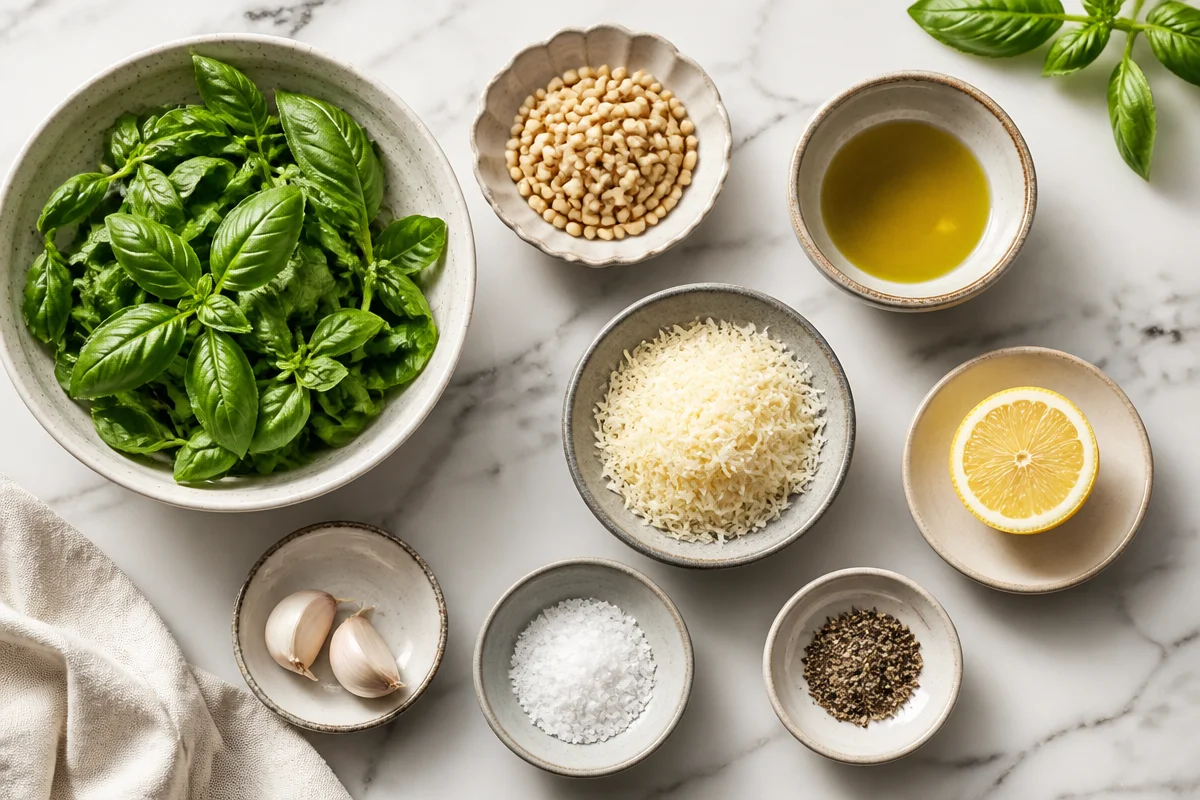
You do not need anything fancy, but you do want decent ingredients. Because this is a no cook sauce, the flavor is basically the ingredient list talking. Here is what I use most of the time.
- Fresh basil, packed leaves with some tender stems are fine
- Garlic, 1 to 2 cloves depending on how strong you like it
- Pine nuts or walnuts (both work great)
- Parmesan cheese or Pecorino, freshly grated tastes best
- Extra virgin olive oil, choose one you would dip bread in
- Salt and a little black pepper
- Optional: a small squeeze of lemon for brightness
If your basil has bigger stems, just pinch off the tough parts. Tender stems are totally fine and actually blend up nicely. For the cheese, I know the pre shredded stuff is tempting, but it does not melt into the sauce the same way and the flavor is flatter.
And about the nuts, pine nuts are classic, but they are pricey. I use walnuts a lot and nobody complains. If you want a softer flavor, try cashews. Just keep an eye on salt levels if your nuts are pre salted.
How to Make Basil Pesto (Step-by-Step)
I usually make this in a food processor because it is quick and easy to control. A blender works too, but you may need to stop and scrape more often. You can also do it the old school way with a mortar and pestle, which is honestly fun if you have time and want a more rustic texture.
Step 1: Get the basil ready. Rinse the basil quickly and dry it well. Wet basil can make the sauce watery, and it does not store as nicely. I pat it dry with paper towels or use a salad spinner if I am feeling organized.
Step 2: Pulse the garlic and nuts. Add the garlic and nuts to the processor first. Pulse a few times until they look finely chopped. This helps the garlic break down evenly so you do not get random spicy chunks.
Step 3: Add basil and cheese. Toss in the basil leaves and grated cheese. Pulse again until it starts to look like a green crumble. Do not run the machine nonstop yet because it can heat the basil and dull the color.
Step 4: Stream in olive oil. With the machine running on low, slowly pour in olive oil until it turns into a thick, glossy sauce. Stop when it looks like something you want to spoon. If you like it looser for drizzling, add a little more oil.
Step 5: Taste and adjust. Add salt, pepper, and a tiny squeeze of lemon if you want it brighter. This is the moment to make it yours. If it tastes flat, it usually needs either a pinch more salt or a bit more cheese.
That is it. Your kitchen will smell like garlic and basil in the best way, and you will probably want to spread it on everything in sight.
Tips for the Best Basil Pesto
I have made pesto that was bitter, too thick, too oily, or weirdly brown, so here are the tips I actually use now.
Dry the basil really well. This is a big one for texture and storage. Water sneaking in can make the pesto separate faster.
Use a light touch with the machine. Over blending can warm the sauce and mess with the bright green color. Short pulses help.
Toast the nuts if you want deeper flavor. A quick toast in a dry pan for a few minutes makes the pesto taste richer. Let them cool before blending.
Go easy on raw garlic at first. Garlic gets stronger as it sits. If you are making pesto ahead, start with less, then add more next time if you want.
Fixing thickness is simple. If it is too thick, add more olive oil or a spoonful of pasta water when you are tossing with hot pasta. If it is too thin, add a bit more cheese or nuts.
If your pesto turns a little darker in the fridge, do not panic. It is still good. A thin layer of olive oil on top helps a lot with keeping it greener.
Basil Pesto Variations
Once you know the basic method, you can play around without stress. I do this when I am missing an ingredient or when my fridge is looking random.
Nut swaps: Walnuts are my everyday choice. Almonds are a bit firmer and slightly sweet. Cashews make it extra creamy. Sunflower seeds are great for nut free pesto.
Cheese swaps: Parmesan is classic, Pecorino is saltier and sharper. You can also do a mix. If you need dairy free, try nutritional yeast plus extra nuts and a little more salt.
Greens mix-ins: If you are short on basil, add a handful of spinach. It keeps the color and stretches the batch without taking over the flavor.
Extra flavor ideas: A squeeze of lemon, a pinch of chili flakes, or a small piece of roasted garlic can change the vibe without making it complicated.
No matter what you swap, keep tasting as you go. That is the secret sauce part of making any homemade basil pesto taste like you meant it.
How to Store Basil Pesto
Pesto stores really well, which is one reason I love making it. It feels like meal prep without the whole meal prep attitude.
In the fridge: Spoon it into a small jar or container and smooth the top. Pour a thin layer of olive oil over the surface, then cover tightly. It is best within 3 to 5 days. Always use a clean spoon so it stays fresh longer.
In the freezer: Freeze pesto in ice cube trays, then pop the cubes into a freezer bag once solid. This is perfect for quick dinners. It keeps well for about 2 to 3 months, and you can thaw just what you need.
Thawing tips: Let it thaw in the fridge or on the counter for a bit. If it looks separated, stir it. If the flavor seems muted after freezing, a small pinch of salt or fresh grated cheese brings it back.
One note: if you plan to freeze a lot, you can hold back some of the cheese and stir it in after thawing. It is not required, just a nice little upgrade.
What to Serve with Basil Pesto
This is where pesto really earns its keep. It can be dinner, lunch, snack, and a last minute “I have nothing in the fridge” solution.
Pasta night: Toss hot pasta with a spoonful of pesto and a splash of pasta water. Add cherry tomatoes or steamed green beans if you want it to feel extra complete.
Sandwiches and wraps: Spread it on bread with turkey, mozzarella, or roasted veggies. It instantly makes a basic sandwich taste like something you would buy.
Pizza: Use pesto as the sauce, or dollop it on after baking. It is so good with mozzarella and sliced tomatoes.
Eggs: Stir a little into scrambled eggs or spoon it over a fried egg on toast. This is one of my favorite quick breakfasts.
Chicken, fish, and roasted vegetables: Brush it on cooked chicken, mix into warm roasted potatoes, or spoon over salmon. The herbs and garlic do a lot of work for you.
If you are hosting, put a bowl of pesto on the table with bread and olive oil. People hover around it like it is the main event.
FAQs About Basil Pesto
Why did my pesto turn brown?
That is usually oxidation, basically the basil reacting to air. It is still safe to eat. Next time, keep blending short, store it with a thin layer of olive oil on top, and chill it quickly.
Can I make basil pesto without pine nuts?
Yes. Walnuts, almonds, cashews, or sunflower seeds all work. The flavor changes a bit, but it is still delicious and very pesto like.
How do I keep pesto from tasting bitter?
Use fresh basil that is not bruised, avoid over blending, and do not use too much garlic. Also make sure your olive oil tastes good on its own, since a harsh oil can read as bitter.
Can I make it ahead for guests?
Definitely. Make it up to a day ahead and refrigerate it. Give it a stir before serving, and taste it again because cold pesto sometimes needs a pinch more salt.
How much pesto should I use for pasta?
A good starting point is about 2 to 3 tablespoons per serving of pasta. Add a splash of pasta water to help it coat everything, then add more pesto if you want it bolder.
Print
Basil Pesto
- Total Time: 10 minutes
- Yield: 4 servings 1x
- Diet: Vegetarian
Description
A quick and easy recipe for classic Italian basil pesto that transforms fresh basil into a flavorful sauce perfect for pasta, sandwiches, and more.
Ingredients
- 2 cups fresh basil, packed
- 1–2 cloves garlic
- 1/2 cup pine nuts or walnuts
- 1/2 cup freshly grated Parmesan cheese or Pecorino
- 1/2 cup extra virgin olive oil
- Salt, to taste
- Black pepper, to taste
- Optional: small squeeze of lemon
Instructions
- Get the basil ready. Rinse the basil quickly and dry it well.
- Pulse the garlic and nuts in a food processor until finely chopped.
- Add basil and cheese, pulsing until it resembles a green crumble.
- Stream in olive oil while the machine runs on low until the sauce is thick and glossy.
- Taste and adjust with salt, pepper, and lemon if desired.
Notes
Use freshly grated cheese for best flavor and texture. Adjust garlic based on preference and consider toasting nuts for deeper flavor.
- Prep Time: 10 minutes
- Cook Time: 0 minutes
- Category: Condiment
- Method: No Cooking
- Cuisine: Italian
Nutrition
- Serving Size: 1 serving
- Calories: 280
- Sugar: 1g
- Sodium: 200mg
- Fat: 25g
- Saturated Fat: 5g
- Unsaturated Fat: 15g
- Trans Fat: 0g
- Carbohydrates: 8g
- Fiber: 1g
- Protein: 6g
- Cholesterol: 20mg
Conclusion
Homemade pesto is one of those small kitchen wins that makes you feel like you have your life together, even if the rest of the day is chaos. Keep your basil fresh, taste as you go, and do not stress about making it perfectly traditional. Once you try this BASIL PESTO RECIPE a couple times, you will start adjusting it without even thinking. Make a batch, freeze a few cubes, and future you will be so happy on a busy night.